Xeriscaping in Utah is a smart way to build a beautiful landscape that uses less water and fits the dry climate along the Wasatch Front. It is not just rock, gravel, and a few plants, and it should never feel bare or unfinished. A good xeriscape plan can lower water use, reduce lawn maintenance, and make your property easier to manage through hot summers and dry conditions.
What Xeriscaping Really Means for Utah Homes
Xeriscaping is a designed approach to landscaping that focuses on lower water use, healthier plants, and better long-term performance. It does not mean removing every living thing and covering the yard with rock. A strong xeriscape in Salt Lake City or anywhere along the Wasatch Front should balance beauty, shade, function, drainage, and irrigation.
The main goal is to place the right plants in the right areas, then water them in the right way. This is especially important in Utah because many yards deal with clay soil, intense sun, dry wind, and winter freeze cycles. Here are the main ideas that make xeriscape landscaping in Salt Lake City work:
- Plan the layout before removing turf.
- Group plants by water needs.
- Improve heavy clay soil when needed.
- Reduce turf in hard-to-water areas.
- Use drought-tolerant and Utah-adapted plants.
- Add mulch to protect soil and plant roots.
- Install efficient irrigation, especially drip lines.
Why Utah Homeowners Are Moving Toward Water-Wise Landscaping
Water wise landscaping in Utah is becoming more popular because homeowners want attractive yards that use less water. In Salt Lake City, Lehi, Draper, and South Jordan, large turf areas can be costly and hard to maintain during dry weather. Xeriscaping helps reduce high-water lawn areas while keeping the property clean and appealing.
Salt Lake City water costs can rise with heavier use, which makes efficient landscape design even more valuable. Utah Water Savers also offers rebates in eligible areas for approved lawn replacement projects. Homeowners should apply and wait for approval before removing turf.
Where Xeriscaping Works Best in a Utah Yard
Xeriscaping does not have to take over the entire property at once. Many homeowners start with problem areas that use too much water, dry out too fast, or are difficult to mow. This makes the project easier to manage and helps you see results before planning a larger conversion. Good starting points include:
- Park strips along the street
- Narrow side yards
- Sloped lawn areas
- Hot south-facing sections
- Areas with sprinkler overspray
- Turf that turns brown every summer
- Front yard areas that are mostly decorative
- Hard-to-maintain corners near driveways or walkways
The 7 Principles of Xeriscaping Applied to Wasatch Front Conditions
The basic principles of xeriscaping work best when they are adjusted for Utah’s climate and soil. A yard in Lehi or South Jordan needs different planning than a coastal or humid region. Along the Wasatch Front, your plan should account for clay soil, sun exposure, elevation, winter cold, and limited summer rainfall.
- Plan and design first: Map sun, shade, slopes, drainage paths, and existing irrigation before choosing plants.
- Improve the soil: Many Utah yards have heavy clay soil, so compost or soil amendments may help water move better.
- Use practical turf areas: Keep grass where it is useful, but remove it from narrow strips, steep slopes, and purely decorative zones.
- Choose Utah-adapted plants: Select xeriscape plants for Utah that can handle hot summers and cold winters.
- Use mulch correctly: Add bark, gravel, or rock mulch to reduce evaporation and protect roots.
- Water efficiently: Drip irrigation sends water to the root zone and helps reduce overspray and runoff.
- Maintain the landscape: Even low-water landscapes need pruning, weed control, irrigation checks, and seasonal care.
Best Xeriscape Plants for Utah Yards
The best xeriscape plants for Utah can handle heat, dry air, and seasonal temperature swings. They should also match the space where they are planted, because a plant that works in a sunny park strip may not work near a shaded patio. The table below gives a simple starting point for plant selection.
| Plant | Type | Water Need After Establishment | Best Use |
| Penstemon | Perennial | Low | Sunny beds, pollinator-friendly areas |
| Lavender | Perennial | Low | Dry, sunny borders and walkways |
| Autumn Joy Stonecrop | Perennial | Low | Low-maintenance color and texture |
| Coneflower | Perennial | Low to Moderate | Flowering areas with seasonal color |
| Russian Sage | Perennial | Low | Hot, open spaces with strong sun |
| Utah Serviceberry | Shrub | Low to Moderate | Native-style planting and wildlife support |
| Rabbitbrush | Shrub | Low | Dry, sunny areas and native designs |
| Blue Oat Grass | Ornamental Grass | Low | Texture, movement, and water-wise accents |
| Woods’ Rose | Shrub | Low to Moderate | Native planting areas and natural screening |
Utah Xeriscaping Ideas That Still Look Finished
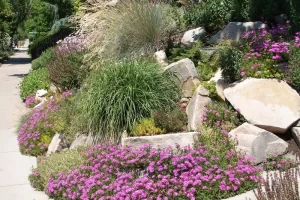
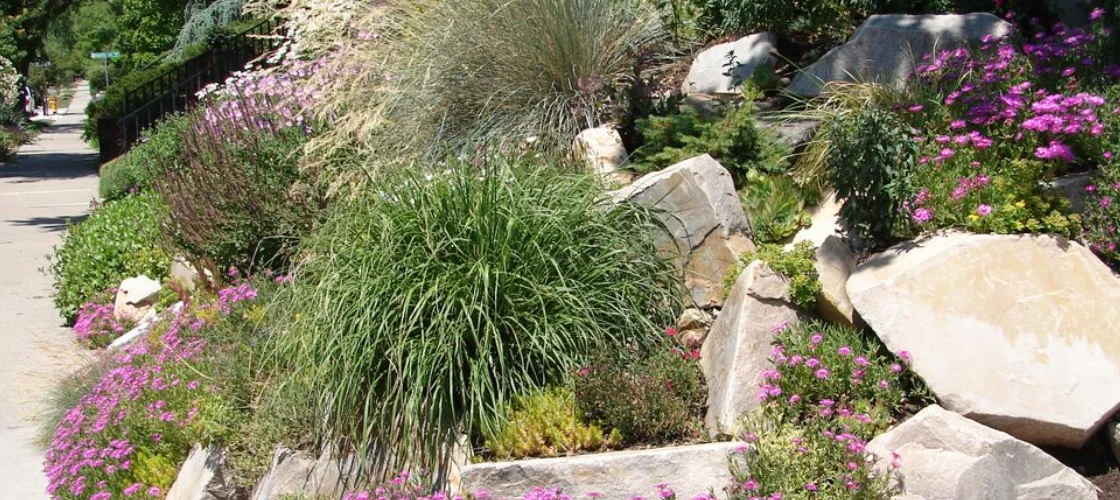
Many homeowners worry that xeriscaping will make their yard look plain, but good design can keep it clean, colorful, and complete. A well-planned xeriscape uses plant groupings, mulch, rock, shape, and open space with a clear layout. Utah xeriscaping ideas that work well include:
- A water-wise front yard with curved planting beds
- A park strip conversion with gravel mulch and low plants
- A dry creek bed for drainage and visual interest
- A patio border with lavender or ornamental grasses
- A boulder layout with native shrubs and drip irrigation
- A small turf area with low-water planting zones
Common Xeriscaping Mistakes to Avoid in Utah
The biggest mistake is treating xeriscaping like a rock-only project. A better plan uses plants, mulch, soil prep, irrigation, and hardscape together, so the space looks finished and performs better.
Other common mistakes include:
- Removing turf before rebate approval
- Choosing plants that need too much humidity
- Skipping soil prep in heavy clay areas
- Using sprinklers instead of drip irrigation
- Leaving bare soil exposed to heat and weeds
- Using one irrigation zone for plants with different water needs
Your Go-To Team for Zeroscape Landscaping Services in Utah
Aeroscape Property Maintenance & Landscaping helps Utah homeowners create practical, attractive, and water-wise outdoor spaces. Our xeriscape landscaping services include turf reduction, drought-tolerant plants, rock and mulch features, and irrigation planning. This is helpful for homeowners looking for xeriscaping in Lehi, UT, Salt Lake City, and nearby Wasatch Front areas. A professional plan can help prevent plant failure, drainage issues, water waste, and an unfinished layout.
Start Your Xeriscaping Project With a Smarter Water-Wise Plan
Xeriscaping in Utah helps reduce outdoor water use while keeping your property attractive and usable. With the right plan for your soil, sun exposure, and irrigation needs, your landscape can look clean and stay easier to maintain. Contact us today to start planning a water-wise landscape for Salt Lake City, Lehi, and the Wasatch Front.